Table of contents
Estimated reading time: 6 minutes
I’m Adam Thornhill, an entrepreneur and investor based in Dubai, originally from Liverpool, England. This series looks back at the early stages of my career – the businesses I built, the mistakes I made, and what those experiences taught me about building something that lasts. I hope you find these lessons useful. I’d love to connect with you if so.
Throughout this series, I’ve written about business risk, business pressure and calculated decision-making. What I haven’t written about much is health, and how quickly that can put everything else into perspective.
As I’ve shared previously, I was born with clubfoot. Because of this, running was never easy for me like it was for others. Over time, though, through boxing, cadets and other sports, I was able to build a strong, healthy body that I was proud to live in.
But somehow, over the years I spent focusing on entrepreneurship, I drifted away from that version of myself. Long days, broken sleep and lots of travel meant my meals, exercise and rest were all inconsistent at best, and this lifestyle eventually took its toll.
In July 2025, at 26 years old, I had a health scare that forced me to reassess how I was living. This is the story of what happened, what the data showed and why I decided to return to running to rebuild strength and discipline.
When Routine Bloodtests Flagged a Health Scare
Last year, I went in for routine blood tests in Dubai to see what was going on inside my body. Straight away, I was told that certain markers required further investigation. Cancer markers.
And suddenly, after years of neglecting my body, I was paying attention.
Follow-up tumour marker tests were carried out, including CEA, CA 19.9, and AFP. Thankfully, the results came back within normal reference ranges, and the immediate risk of cancer was ruled out.
However, an abdominal ultrasound revealed two findings I couldn’t ignore:
- Diffuse fatty liver (grade I–II)
- A 3mm echogenic focus in the superior pole of the left kidney, likely a kidney stone
The liver showed mild to moderate increased parenchymal echogenicity – clinical language that points to early-stage fatty liver disease. At 26, this wasn’t ideal.
Feeling Both Relief and Responsibility
There’s a strange duality in hearing “it’s not cancer” while simultaneously discovering you have underlying health issues.
Neither of these diagnoses was catastrophic, but they were warning signs. That’s when the determination kicked in: this was something I could reverse, something I could control.
Fatty liver in young adults isn’t rare, but it is avoidable in many cases. It can also be a contributing factor in developing kidney stones, which, from what I’ve heard, are more painful the bigger they get!
In business, I’ve always believed in acting on early indicators before problems escalate. Ironically, I hadn’t applied the same logic to my own health, but now I had a chance to.
Why I Returned to Running to Take Charge of My Health
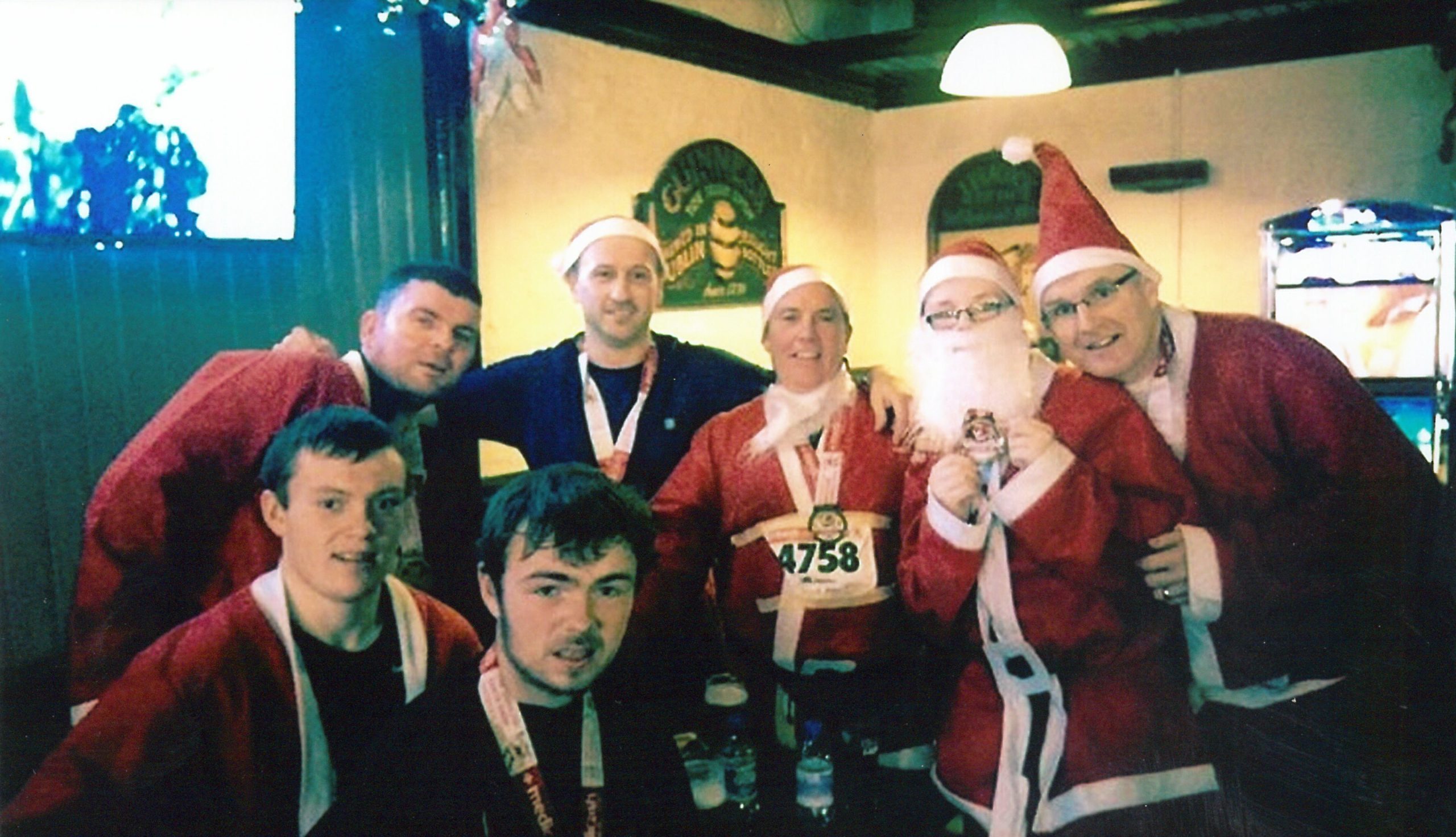
I’ve never been a runner per se, but I have run in the past. I took part in the Santa Dash 5Ks in Liverpool and the Wirral Half Marathon in 2016, but business has always taken priority since then, and running just fell out of my schedule.
A year or so before the health scare, however, I had already decided to lace up my running shoes and get back out there, mainly so I could lose some weight. However, I knew that just pounding the pavement a few times a week with zero direction wasn’t going to motivate me to change my health.
If I was going to reverse early fatty liver changes and improve overall cardiovascular fitness, it needed to be measurable. I needed data.
That’s when I began tracking performance metrics using WHOOP. My early reports showed:
- Average resting heart rate: 60 BPM
- Average sleep duration: 8.21 hours
- Average daily aerobic activity: 12 minutes
The sleep was acceptable. The resting heart rate was stable. But 12 minutes of aerobic activity per day told me everything I needed to know.
From Health Scare to Public Accountability
Rather than setting unrealistic goals, I entered structured events to create accountability:
- Sketchers Performance Run 3km – January 2026
- Tristar 3km – January 2026
- Cancer Run 5km – February 2026
- NMC Community Run 5km – February 2026
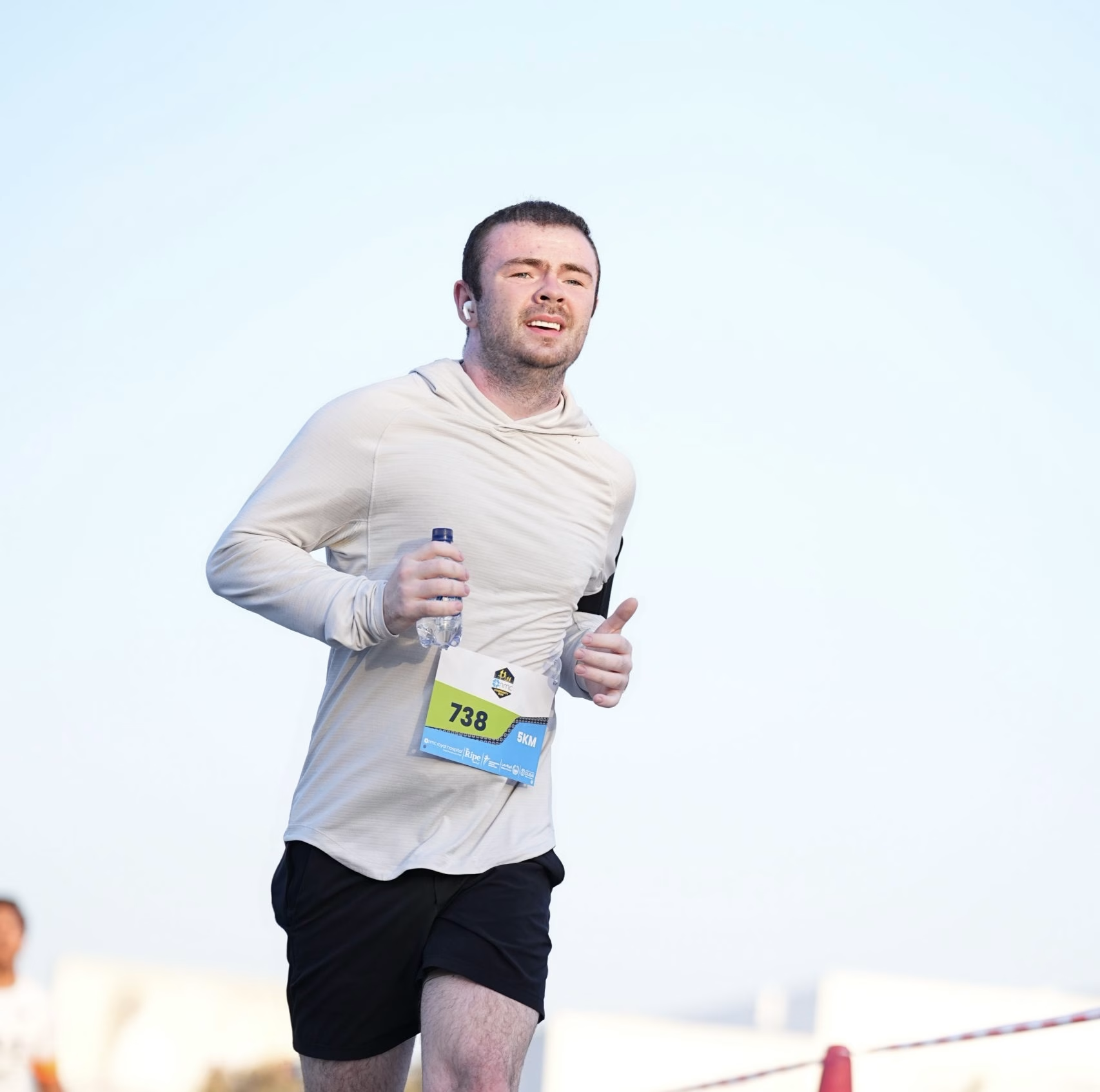
There’s something powerful about pinning a number to your shirt and standing on a start line. For me, this wasn’t just about showing up or finishing races. It was about reversing unhealthy patterns and rebuilding discipline after a huge wake-up call.
The Link Between Health and Entrepreneurship
One thing this period reinforced for me is how closely health and business are tied together.
Through my research, I discovered that fatty liver doesn’t develop overnight – it builds gradually through repeated small decisions, such as what you eat and how much (or little) you exercise. The same applies to financial instability or operational weakness.
Both health and business respond to consistency, and my health was an area I clearly needed to improve.
What Did the Numbers Show?
In October 2023, my InBody scan recorded:
Weight: 98.0 kg
- Body Fat Mass: 37.2 kg
- BMI: 31.3
- Body Fat Percentage: 38.0%
By January 2025, that had shifted to:
- Weight: 86.1 kg
- Body Fat Mass: 29.6 kg
- BMI: 27.5
- Body Fat Percentage: 34.4%
That’s nearly 12 kilograms lost and over 7 kilograms of body fat reduced. But although I had already started losing weight, the July 2025 ultrasound confirmed that my internal health hadn’t fully caught up with the external progress.
So even though the numbers have improved, my ongoing discipline now has to match them.
Why I’m Sharing This Publicly
It would have been easy to keep this health scare private. Many people do, and I could never judge them for that, as it’s so personal.
But for me, transparency creates accountability. By documenting my return to running and sharing my race results publicly, I remove the option of drifting back into complacency.
At 26, I was given a warning, not a diagnosis, and I chose to treat it as an opportunity.
The lesson I learned from this is similar to every other chapter in this series, and my life as a whole: measure honestly, adjust early, and build consistently.
Check out all my training and behind-the-scenes runs here:
https://strava.app.link/l7wjF9ovM0b

Follow my progress, see what goes into making race day happen! 💪🏃♂️📈

Pingback: avanafil dosering
Pingback: tirzepatide vs semaglutide for cardiovascular health
Pingback: semaglutida preço pague menos
Pingback: what dosage of topamax for weight loss
Pingback: does alcohol react with doxycycline
Pingback: flagyl 400 mg genérico
Pingback: is there a generic liraglutide
Pingback: ivermectin kinetic profile
Pingback: avanafil mechanism
Pingback: PDE5 inhibitor comparison
Pingback: Onset Difference: Sildenafil vs Levitra
Pingback: the ED treatment guide
Pingback: tadalafil telehealth and online access