

Table of contents
- My Love of Cars: Where It All Began
- My First Lesson in Vehicle Loss
- From Driver to Trader: Getting into Business
- The Land Rover Discovery TD5: Learning to Improve Value
- The Subaru: Discovering Restoration and Patience
- A Crucial Realisation: Overlooked Vehicles Present Real Opportunity
- The Fiesta ST and Letting Go
- Returning to Cars in Dubai
Estimated reading time: 7 minutes
I’m Adam Thornhill, an entrepreneur and investor based in Dubai, originally from Liverpool, England. This series looks back at the early stages of my career – the businesses I built, the mistakes I made, and what those experiences taught me about building something that lasts. I hope you find these lessons useful. I’d love to connect with you if so.
Throughout this series, I’ve written about calculated risk, resilience, and long-term strategic decision making. We’ve discussed my health, my hobbies and my entrepreneurial pursuits, and it’s been great to share my story publicly.
Long before I started building companies, consultancies, or investment portfolios, however, there was something far simpler I was drawn to – something that taught me early on about independence, profit and loss. Cars.
My Love of Cars: Where It All Began
Even as a child, I was drawn to cars. It wasn’t just about the flashiest models or how they looked – it was how they worked, the intricate mechanisms under the hood.
I was fascinated by the idea that thousands of individual components could function together as one system. When maintained properly, it boggled my mind that this machine on wheels could take you anywhere you wanted to go, and that you were in complete control.
While most people saw cars purely as transport, I saw them as mechanical systems that could be understood, fixed, improved and, in some cases, rescued. This curiosity led me to study a BTEC in Vehicle Technology at school, which later inspired my first taxi business.
Then, at sixteen, I bought a scooter and completed my CBT. It wasn’t glamorous, but it gave me something far more important: independence. For the first time, I could move without relying on anyone else.
My First Lesson in Vehicle Loss
At seventeen, my uncle, who was a motor trader, gifted me a Renault Clio he had picked up from auction. The car was far from perfect – the alternator was failing and it had its own quirks – but it was mine.
I learned to drive in that Clio. Every stall, every smoother gear change, every small improvement happened inside that car. Passing my driving test felt like independence officially earned. But a week later, my beloved car was written off in an accident.
It was an early lesson that freedom can be temporary, and that loss doesn’t ask whether you’re ready for it.
From Driver to Trader: Getting into Business
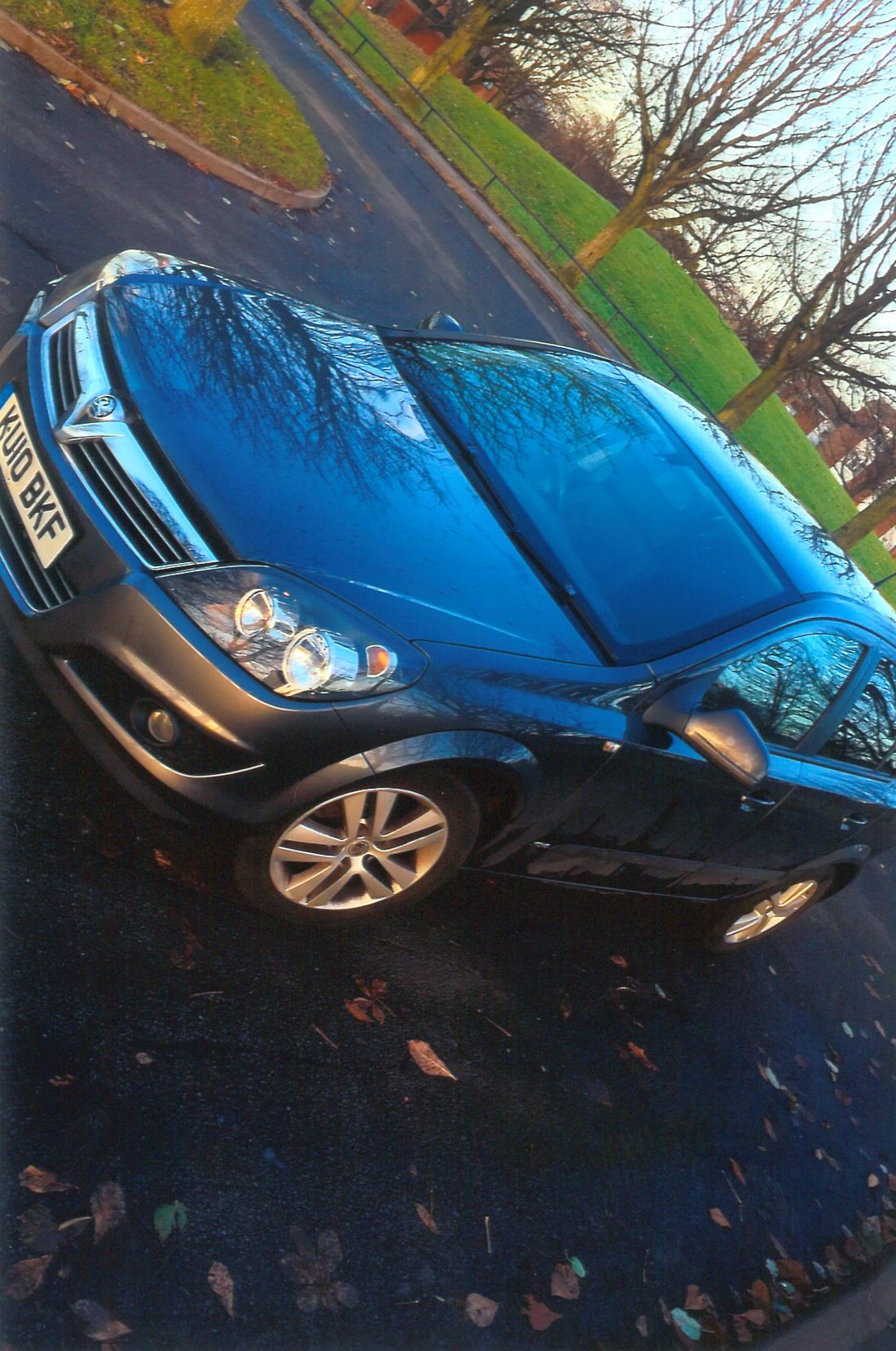
With limited money, I bought what I consider my first real car, which was a Vauxhall Astra. By modern standards, it was pretty basic, but it represented momentum – a life moving forward.
I soon discovered that although I loved driving, it wasn’t enough for me. I wanted to be more involved, and somehow combine my passion for cars with my aptitude for business.
I started going to auctions, just observing at first. I watched experienced traders evaluate vehicles in seconds, making decisions quickly and without emotion. Gradually, I started participating, buying, and selling on a small scale.
Not every deal worked, and some mistakes were expensive. But every misjudgement refined my instincts. Cars became more than transport; they became my first experience of buying low, improving value, and managing risk – all crucial entrepreneurial lessons.
The Land Rover Discovery TD5: Learning to Improve Value
One of the most memorable projects from that period was a Land Rover Discovery TD5.
I purchased it as a project vehicle and converted it to make it more capable off-road, preparing it for events I planned to attend. This was the first time I was able to take something functional and improve it through effort and understanding.
The TD5 was a huge milestone for me and reinforced a principle that has stayed with me ever since: value is often created through intelligent improvement rather than initial perfection.
If you buy correctly and make calculated upgrades, you can increase both utility and appeal, but if you over-invest emotionally or ignore margin, the numbers rarely work in your favour. That balance between passion and practicality is something I still apply in business today.
The Subaru: Discovering Restoration and Patience

Around the same time, I completed a full restoration on a Subaru. Restoration teaches patience in a way few other projects can, because shortcuts reveal themselves later, usually at a higher cost.
Working through that process strengthened my appreciation for doing things properly the first time. It also highlighted something important: effort compounds. The more time you invest in understanding a system, the more confident your decisions become.
A Crucial Realisation: Overlooked Vehicles Present Real Opportunity
Not all the vehicles I worked with were exciting: Ex-Royal Mail vans, Peugeot Partners, Transit campers, and Hackney cabs formed part of the mix. These were vehicles most people overlooked, but they taught me that assets don’t need to impress – they just need to perform. That distinction later fed directly into my first taxi business, where vehicles became income-generating tools rather than passion projects.
There is a difference between loving something and monetising it, and learning that difference early shaped how I evaluated opportunities moving forward.
The Fiesta ST and Letting Go
Just before leaving the UK, I bought a Ford Fiesta ST. This purchase represented progress – it was one of those cars you looked forward to driving, not because you had somewhere important to be, but because you enjoyed the experience itself.
Not long after buying it, however, it was stolen and never recovered.
The financial loss was frustrating, but what stayed with me was the personal element. It symbolised a chapter of work and independence, and losing it created a strange sense of closure.
Looking back, that moment became one of the factors that pushed me to leave the UK. Sometimes losing something creates the space for something new to begin.
When I moved to the Netherlands, cars became distant for the first time in years. I drove rentals when needed, but ownership creates a different level of connection and responsibility.
I also noticed how significantly more expensive vehicles were compared to the UK. Cars that would be affordable at home carried substantial premiums there. It reinforced an important lesson: geography shapes opportunity. The same asset can carry different value depending on location, demand, and regulation.
Returning to Cars in Dubai
When I moved to Dubai and decided to stay long-term, my love for cars returned.
Dubai is a city built for driving, and I enrolled with Copart locally. Following the floods, there were significant numbers of damaged vehicles entering the auction that many people avoided.
But years earlier in the UK, I had learned how to evaluate vehicles quickly and without emotion. Assessing damage, calculating potential repair costs, and weighing risk against margin felt less like starting again and more like returning to fundamentals.
What Cars Actually Taught Me
Looking back, cars were never just about transport for me. They were my first exposure to risk management, loss recovery, margin awareness, and opportunity recognition. They taught me how to detach emotion from investment decisions and how to improve an asset rather than simply consume it.
But most importantly, they gave me independence. Perhaps this is more meaningful to me because I was born with clubfoot and movement was restricted, I don’t know.
All I know is that before offices, before employees, before consultancy or investment portfolios, cars gave me movement. That movement created autonomy, autonomy created confidence, and confidence made entrepreneurship feel possible.
If you’re inspired by my story, please get in touch – I’d love to hear from you. If you’d like to work with me.
Pingback: levitra v viagra
Pingback: bupropion sr brand name
Pingback: xenical australia reddit
Pingback: ketoconazole complete guide
Pingback: terbinafine knowledge base
Pingback: ivermectin guide FAQ
Pingback: vardenafil vs sildenafil comparison details
Pingback: medical review policy
Pingback: otitis media overview
Pingback: sinusitis nasal congestion
Pingback: Sildenafil vs Cialis Onset Clinical Comparison
Pingback: learn about sildenafil