
Table of contents
- Finding My First Customers: Where It All Began
- Learning Lessons – What Worked for Cars May Not Work for Other Businesses
- Changing My Approach – Learning to Pivot
- Trying to Scale In the Travel Business
- Learning Through Movement
- Starting From Zero Again
- Building Familiarity and Trust
- Finding Customers My Own Way
Estimated reading time: 7 minutes
I’m Adam Thornhill, an entrepreneur and investor based in Dubai, originally from Liverpool, England. This series looks back at the early stages of my career – the businesses I built, the mistakes I made, and what those experiences taught me about building something that lasts. I hope you find these lessons useful. I’d love to connect with you if so.
Finding My First Customers: Where It All Began
One of the most important lessons I’ve learned over time is that every business needs customers, but the reality of where you find customers changes depending on where you are in life, what you’re building, and who you have around you.
There are so many variables that it can be difficult to sustain a business long-term unless you have the right strategy. I’ve finally got there now, but it took me a while!
Let’s rewind…
When I was 17 and first starting to buy and sell cars, I didn’t have a marketing plan or any kind of strategy for finding or retaining customers.
What I did have, however, was a network. Most of my friends were just passing their driving tests. Naturally they were all looking for cheap first cars, so that’s what I focused on sourcing.
My first customers were simply the people around me. I didn’t realise at the time how important this would turn out to be.
Learning Lessons – What Worked for Cars May Not Work for Other Businesses
As time passed, my network changed as it does for most people when they’re young. People moved on, friendship groups grew smaller, and that initial network wasn’t enough anymore. I couldn’t rely on selling cars to the same group of people forever, so I had to find other ways to make money.
This is when I moved into the taxi business and realised I was facing a completely new challenge. I wasn’t trying to sell vehicles anymore – I needed to find reliable drivers.
Taxi businesses tend to run in two main ways: either the vehicle is shared between two drivers on day and night shifts, or one driver keeps the car full-time. In both cases, reliability matters more than anything else.
At first, I tried going straight to taxi ranks and speaking to drivers directly, but looking back, this was never going to work. Most of the drivers had been doing it for years, and I was a 20-year-old trying to rent out taxis – one of which was bright pink with a PrettyLittleThing wrap. It didn’t exactly build confidence.
Changing My Approach – Learning to Pivot
Eventually, I had to change how I approached the business. I couldn’t just rock up and expect people to trust me like my friends had. I had to build those relationships gradually.
So that’s what I did. There was a local place where taxi drivers would congregate after their shifts to play pool and have a drink, so I started going there regularly. I didn’t try to pitch anything straight away – I just spent time there, got to know people and let conversations happen naturally.
After a few visits, though, I managed to secure my first drivers, who agreed to split the cab between them on a day and night basis. When Christmas came around, I gave them a week free to settle in, which helped build trust early on. Later, when I added a second taxi, those same drivers started recommending their friends.
This was the first time I saw how powerful word-of-mouth networking can be when you’re not trying to force anything.
Trying to Scale In the Travel Business
When I later moved into the travel business, I knew straight away that friends and referrals alone wouldn’t be enough.
So I learned from my earlier pivot into the taxi industry and tried several different approaches. I experimented with Meta ads and even radio placements, but neither really gave me the return I was expecting. I felt like I was spending money without building anything long-term.
Then, I tried something more practical. I put advertising stickers on my taxis and told the drivers that if they brought travel clients to me, they’d get paid for referrals. It gave them a reason to talk about the business and created another channel for customers to come through.
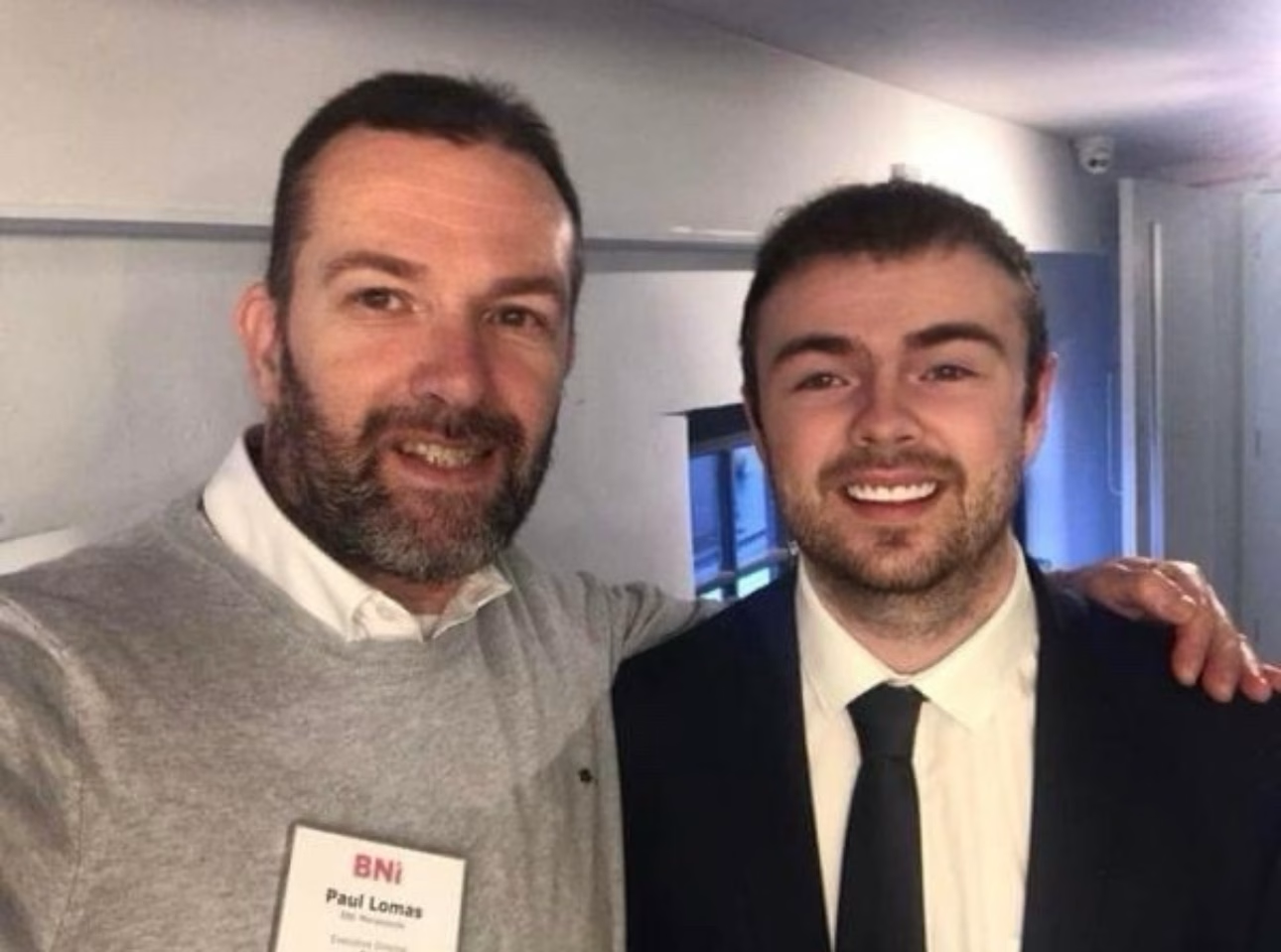
Around the same time, I joined BNI Alpha in Liverpool, which was a different world entirely. Every week, business owners would meet, talk about what they were doing, and actively look for ways to help each other through referrals. It also meant standing up and presenting regularly, which wasn’t something I was used to.
The first few times were uncomfortable, but eventually it built confidence and helped me get better at explaining what I was actually offering.
Learning Through Movement
At one point, I decided to travel across Europe, spending time in places like Haarlem, Paris and Belgium.
Part of my reasoning for this was so I could advise travel clients more effectively, but it also gave me the chance to meet people along the way. Conversations with travellers and tourists naturally led to new connections.
After around 10 months, I returned to the UK, but I was already thinking about what was next. Dubai was positioning itself as a global business hub, and it felt like a place where I could build relationships with people who valued service and were willing to pay for it.
When I later launched my consultancy business, I approached things differently again. This time, I avoided paid ads completely and went straight to the customers, relying on networking, building relationships, and word-of-mouth advertising.
Starting From Zero Again
When I first moved to Dubai and launched Relate Consultancies (a consultancy that supports foreign nationals and international businesses looking to operate in the UAE), I joined Facebook groups aimed at British expats living in the area.
Rather than posting services straight away, I spent time reading through the posts and comments. I looked at the questions people were asking and the problems they were dealing with – visas, bank accounts, moving logistics. Then I started helping.
Some of the first people I helped, I didn’t charge at all. Partly because I wanted to build relationships, and partly because I was still learning myself. They tell you to never give anything away for free in business, but this turned out to be one of the best decisions I made.
These early connections started recommending their friends and associates, and before long, the network began to grow on its own. At one stage, it was bringing in roughly one new client per week!
Building Familiarity and Trust
To build on my existing network, I started going to Liverpool supporter clubs in Dubai. (I’m actually an Everton fan, but that didn’t really matter. Being around people from my same city created an immediate level of familiarity!)
Here, instead of being another business owner, I was someone from home. That made conversations easier and I found it was quicker to build trust with new people. At the same time, people back in the UK would occasionally hear about someone planning to move abroad and pass my details on.
More recently, even running has played a part. I’ve met a few clients through conversations after events or training sessions, just through being around the right environments.
All of this goes to show that when you have the right attitude and approach, you can find customers anywhere and everywhere.
Finding Customers My Own Way
Looking back, I tried most of the usual routes when it came to finding customers: online ads, radio, sponsorships and referrals.
Some of these approaches worked better than others, but the most consistent results have always come from the same place – meeting people in real life, and helping without expecting anything back.
It might be slower at the start, but it builds something more solid over time.
If you’re inspired by my story, please get in touch – I’d love to hear from you.

Pingback: dapoxetine uses time
Pingback: semaglutid köpa online
Pingback: semaglutid wirkung im körper
Pingback: metronidazole gel safe while pregnant
Pingback: costco minoxidil cost
Pingback: terbinafine dosage review
Pingback: ivermectin safety in dermatology
Pingback: ivermectin mechanism source
Pingback: minoxidil 2% vs 5% beard growth
Pingback: minoxidil faq
Pingback: minoxidil foam vs liquid comparison
Pingback: sildenafil mechanism science
Pingback: vardenafil 10 mg tablet notes
Pingback: vardenafil 5 mg tablet reference
Pingback: vardenafil warning factors
Pingback: online safety security
Pingback: penicillin allergy treatment
Pingback: sildenafil mechanism